Las Vegas signs can be a starting point for a tattoo conversation because they offer distinctive shapes, spacing and relationships between light and dark. But recognizing a famous sign is different from knowing its history, and enjoying its design is different from deciding to reproduce it on skin.
A useful reference brief keeps those questions separate. It records what a source actually says, identifies the feature you are responding to and leaves room for the commissioned artist to create an original composition.
Start With an Identifiable Source
The Neon Museum preserves and interprets Las Vegas signs. For a more detailed research route, the Southern Nevada Neon Survey Records at UNLV document signs through photographs and survey forms, including location, condition, artistic significance and history. These resources help you move beyond an unattributed image circulating on social media.
Save a collection link or record identifier alongside a reference. Note the sign’s name as given by the institution and distinguish that information from your own memory of a place. If a date or designer is not established by the record, leave it unresolved rather than filling the gap with a story that sounds plausible.
Decide What You Are Actually Borrowing
You might respond to a long curve, an off-center shape, a sequence of repeated elements or the relationship between lettering and open space. Name that feature in plain language. It gives the artist a more precise starting point than asking for a Las Vegas feeling.
Try making a short list with three columns: what the source shows, what interests you, and what you want the artist to develop. For example, the source might show a layered sign while your interest is the sense of upward movement. The proposed tattoo does not automatically need to reproduce the sign, its wording and its complete supporting structure.
Distinguish History From Personal Association
A sign can remind you of a relative, a trip or a period in your life. That association is valuable as your own explanation. It should not become a statement that a particular shape has always represented the same idea to everyone in the city.
When historical context is part of the design, bring the source record rather than only its picture. A photographer’s caption, a collection description and a personal recollection answer different questions. Keeping them separate helps the artist understand which details you consider essential.
Discuss Lettering Before It Becomes the Whole Project
Some people want a readable place name. Others want an abstract arrangement of shapes with no words at all. Tell the artist which project you are proposing. A design built around lettering needs a different discussion from one built around a silhouette or a contrasting pair of colors.
If the source includes logos or another artist’s distinctive work, do not assume that finding the image online settles how it may be used. Discuss the reference’s role and any permissions needed. An original design can explore an atmosphere or a structural idea without copying an entire existing image.
Turn the Research Into an Editable Brief
Bring a one-sentence concept, a small selection of credited references and an approximate size and placement. Explain what you want a viewer to notice first. Add the elements you are comfortable leaving out, especially if several sources perform the same visual job.
Our tattoo reference-folder guide offers a way to organize that material. The aim is a discussion the artist can respond to, not a finished collage that leaves no room for their judgment.
Research Questions Worth Asking
Does the museum source show a tattoo design? No. It documents signs and their context. Translating a reference into a tattoo is a separate creative process.
Must the tattoo reproduce the lettering? No. Decide whether words are central to your idea before the consultation.
What if a detail’s history is unclear? Keep the uncertainty in your notes. Use what the record establishes and avoid attaching an invented explanation to it.
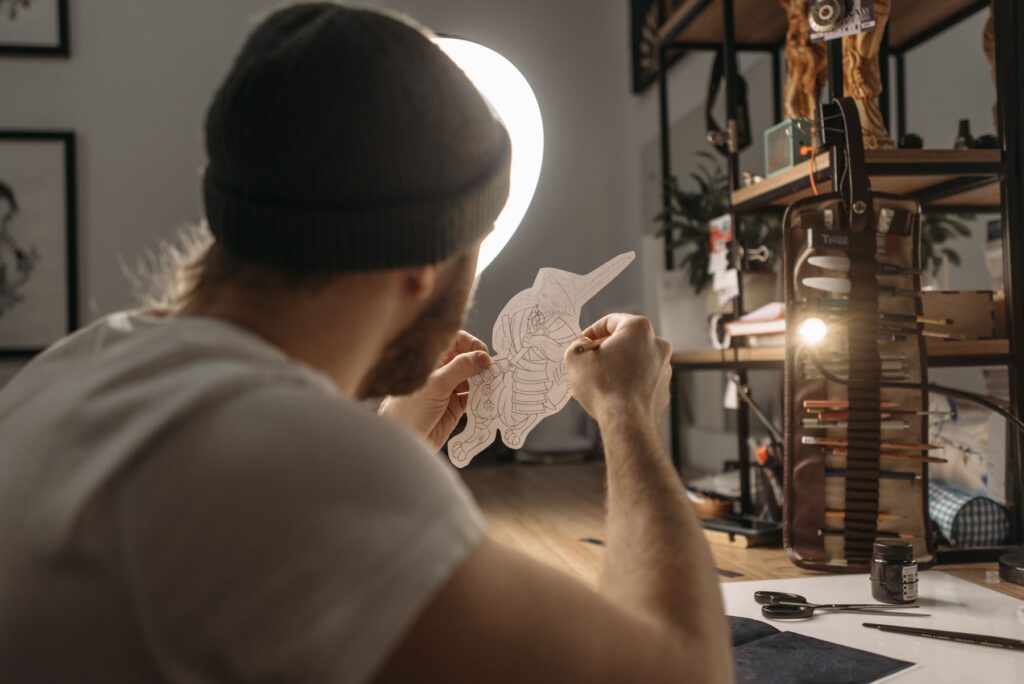
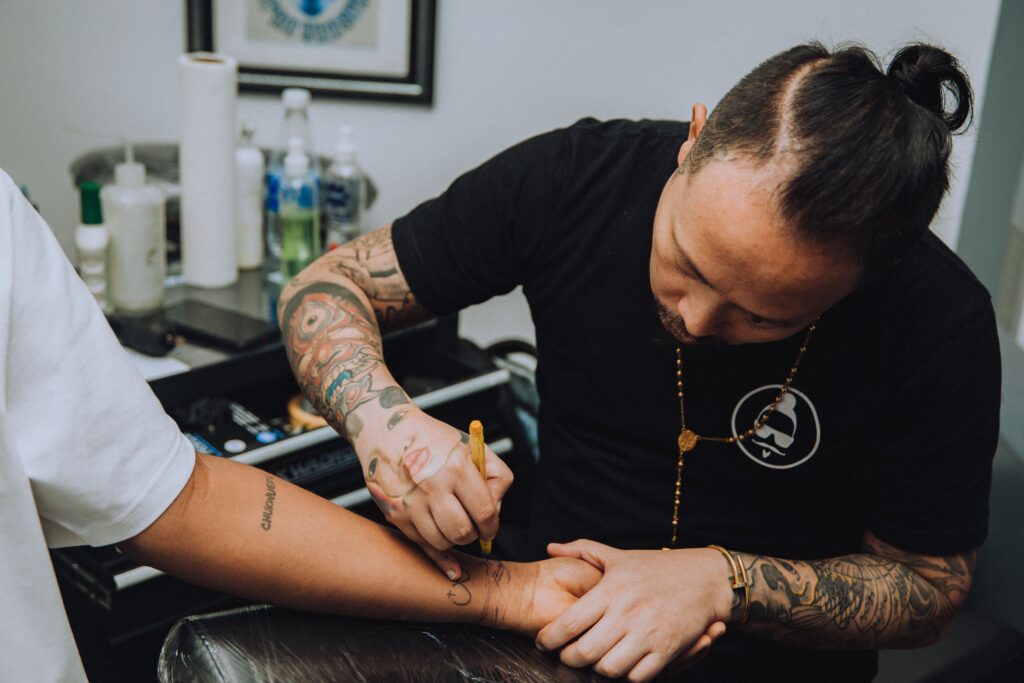
Representative licensed stock photograph of the design process; not a photograph of a named local artist, institution or featured location. Photo credit and reuse permission are retained in TIP’s image record.