The first thing to notice about the Smithsonian American Art Museum’s Tattoo Flash Sample Book is its binding. The museum describes colored drawings on cardboard, protected by plastic sleeves and held together with grommets and leather ties. You can browse the catalog pictures and see a physical object designed around turning pages. That is a different way to encounter tattoo drawings than scrolling through individual images on a phone.
Read a page as a group of designs
Open the Smithsonian’s record for sheet 1998.84.50D. The museum identifies an eagle, a butterfly, a nurse figure and Cupid among its subjects. On sheet 1998.84.50E, the catalog points to a ship and a shield among other motifs. Looking at the two sheets side by side reveals the variety a reader could see in a small set of pages.
Try a close-reading exercise. Pick two motifs from one sheet and look at the amount of space around them. Follow the edges of each shape before looking at the details inside. Then step away from the screen and see what you remember. This gives you a way to talk about what holds your attention, such as the profile of a bird or the angle of a ship, without treating each image as a fixed code that means the same thing to everyone.
Pay attention to what the catalog can document
The museum dates the book to the 20th century and lists the maker as unidentified. That leaves room for questions about where and how these pages were used. The object record alone gives no basis for assigning it to a famous artist or naming a specific shop. For another example, compare Tattoo Flash (6 designs), which the Smithsonian credits to Ernie and records as ink and colored washes on paper. The two records show how the same kind of subject can survive in different materials and with different amounts of information about its maker.
Take a useful observation to your artist
If you are collecting references for a commission, save the catalog link and write down the feature that made you stop. “I like the silhouette and the movement” gives a tattoo artist room to draw something new. A direct link also keeps the institution, object title and catalog number attached when the picture travels. Ask about any studio rules for existing designs before you book. Our flash and custom tattoo guide covers questions you can ask when choosing between available flash and a commission.
Frequently asked questions
Can I see the sample book in the museum?
The catalog lists the book as off view when checked on November 18, 2026. Start with the online object record and check with the museum before planning a visit around it.
How should I credit a historical flash reference?
Record the institution, title, maker as listed, accession number and link. If you plan to reproduce an image, check that specific record’s usage terms. The Smithsonian shows different information on the sample book and the individual sheets, so use the record for the exact item you consulted.
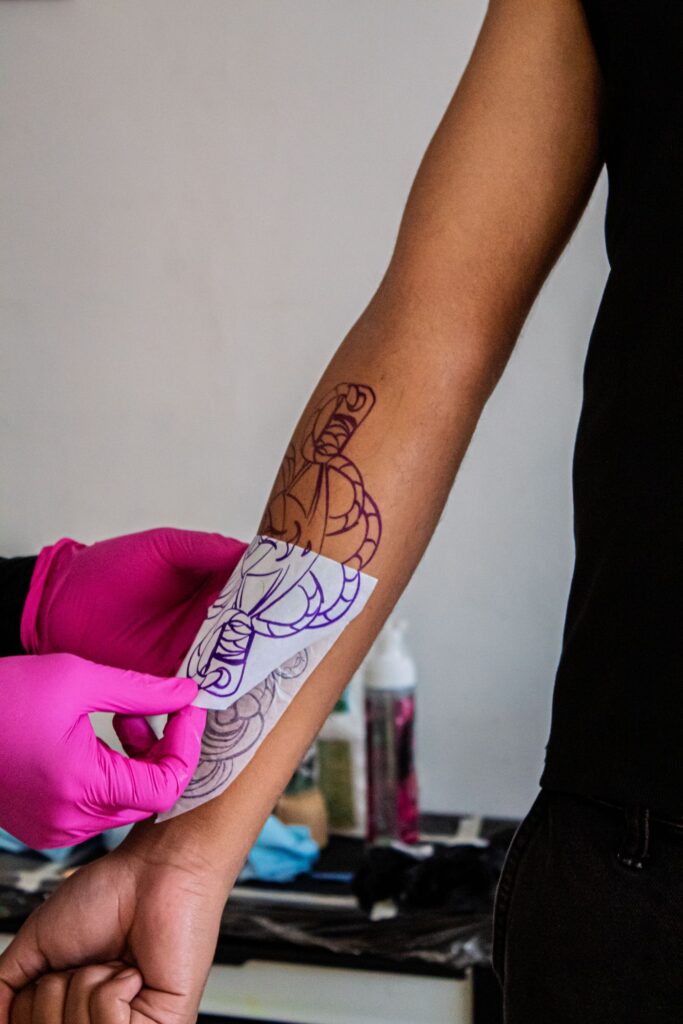
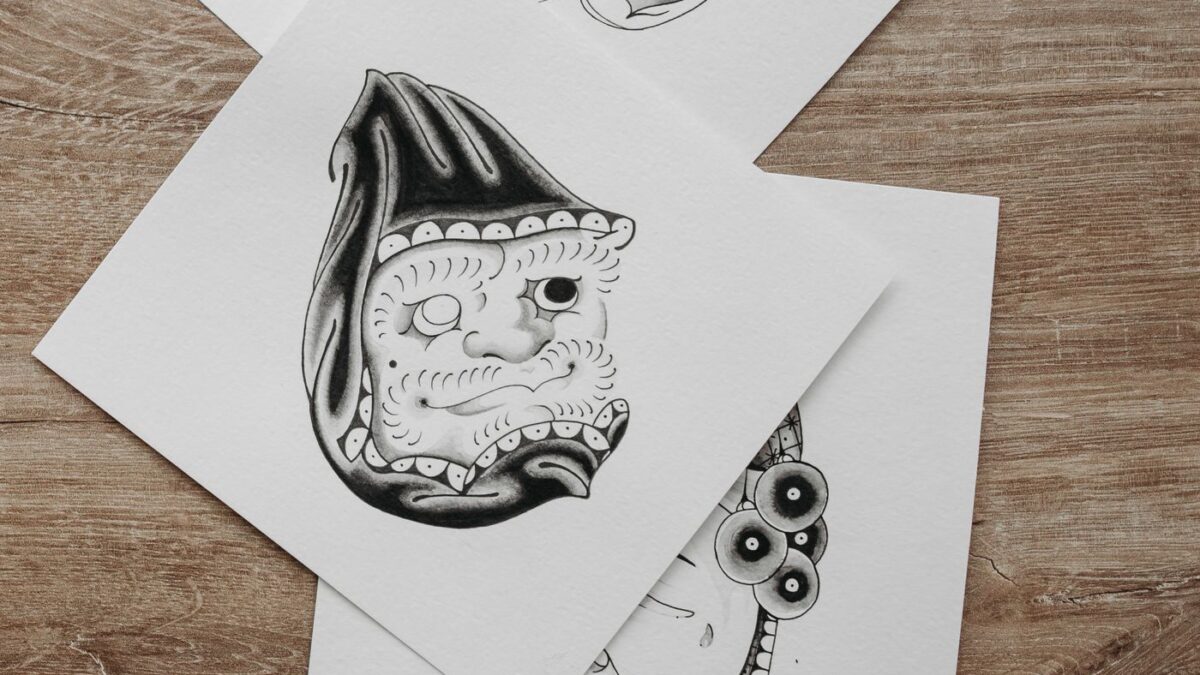
Featured photograph by Pavel Danilyuk under the Pexels License. Stock photograph illustrating tattoo drawings, separate from the Smithsonian objects.